Review: Swirly Valentine’s Day Heart Applique
As a designer who spends more time staring at stitch maps than actual fabric, I have learned that not all holiday motifs are created equal. Some are cluttered, some lack structural integrity, and others simply do not translate well from screen to thread. When I pulled up the Swirly Valentine s Day Heart Applique for a recent batch of seasonal samples, I was looking for something that balanced whimsy with professionalism. This design, categorized under Valentine S Day Embroidery, promises a stylized, swirly aesthetic suitable for applique work. After putting it through its paces on various textiles, I am ready to share my practical assessment for fellow embroidery designers, Etsy sellers, and craft business owners.
First Impressions and Visual Personality
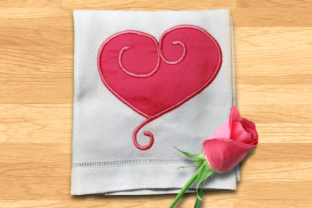
The immediate appeal of this applique design lies in its fluidity. Unlike rigid, geometric hearts that can feel stiff or dated, the swirly lines introduce a sense of movement and softness. This is crucial for Valentine’s Day projects, where the mood should lean toward romantic, playful, or tender rather than corporate or cold. The layout is clean, with distinct color changes that separate the steps logically. For a machine embroidery design, this separation is vital. It allows for precise placement of the fabric cutouts before the securing stitches engage, reducing the risk of shifting materials during the hoop-up process.
The visual personality here is versatile. It does not scream "cheap novelty." Instead, it feels like a deliberate design asset that could sit comfortably in a boutique setting. Whether you are creating a high-end personalized gift or a small shop product for a local craft fair, the elegance of the swirls adds a layer of sophistication that basic clipart-style hearts often miss.
Real-World Application: The Tote Bag Test
To truly evaluate an embroidery file, you must see it in action. I decided to use the Swirly Valentine s Day Heart Applique on a canvas tote bag, a staple item for many handmade product lines. Canvas presents a unique challenge due to its weave and thickness. I paired the design with a contrasting cotton fabric for the applique section. The result was striking. The satin stitch borders held firmly against the textured background, and the fill stitch areas within the swirls provided enough coverage to prevent the base fabric from peeking through unintentionally.
This specific application highlights why this design works well for tote bag design projects. The scale is substantial enough to be seen from a distance, making it effective for merchandise display, yet detailed enough to reward closer inspection. For an Etsy seller, this means the thumbnail image will pop, and the finished product will hold up to customer scrutiny. I also tested it on a fleece sweatshirt. Here, the applique method shines again by reducing bulk. Instead of thousands of dense stitches that can make a garment stiff and uncomfortable, the fabric fill keeps the sweatshirt embroidery soft and wearable.
Navigating Fabric and Hoop Constraints
While the design is robust, it is not without its limitations. Experienced makers know that stitch density and fabric texture must align. I would advise caution when using this on very thin or stretchy fabrics without adequate stabilization. The swirling lines require tension consistency; if your stabilizer choice is weak, the threads may pucker, distorting the heart shape. Always use a cut-away stabilizer for knit garments like baby clothes or t-shirts to ensure longevity after washing.
The product description notes that four hoop sizes are included in the zip file. This is a significant advantage for versatility. However, you must match the hoop size to the project. Using the smallest version on a curved surface, like a cap, requires careful hooping techniques. The tight curves of the swirls can be tricky on structured hats. If you are new to cap embroidery, I recommend testing the design on a flat piece of similar weight fabric first to check for registration issues. Additionally, avoid placing this design over seams or zippers, as the needle deflection can ruin the precision of the satin stitch outlines.
Commercial Viability and Brand Consistency
For commercial embroidery and digital product sellers, consistency is key. The Swirly Valentine s Day Heart Applique offers a cohesive look that can be integrated into a broader spring or love-themed collection. Because the steps are separated by color changes, it is easier to maintain quality control across multiple units. You do not need to worry about complex color sorting or combining files, which saves time in production environments.
From a branding perspective, this design supports a professional image. It avoids the overly cartoonish look that can sometimes devalue handmade items. When customers see clean lines and well-executed applique work, their trust in your craft business increases. It signals that you care about the details. This is particularly important for wedding gifts or nursery decor, where buyers expect a higher standard of finish. The design’s adaptability means it can serve as a standalone focal point on a pillow cover or as part of a larger composition on an apron or kitchen towel.
Practical Designer Notes for Best Results
Before you launch this into your next big production run, consider these technical checks. First, always test the design on scrap fabric that matches your final material. Thread color contrast plays a huge role in how the swirls are perceived. A low-contrast thread might make the details disappear, while a high-contrast choice can make the design pop. I found that using a slightly glossy rayon thread enhanced the visual appeal of the satin stitches, giving the heart a subtle sheen that matte polyester lacked.
Second, inspect the small details. While this design is not overly intricate, the points where the swirls intersect require sharp needles and proper tension. Dull needles can cause skipped stitches or thread breaks in these tighter areas. Third, consider your licensing. The product description advises not to color sort or combine, which suggests the file structure is optimized for a specific sequence. Respect these guidelines to ensure the design performs as intended. If you are selling finished items, confirm the license terms for commercial use. If you are selling the digital embroidery file itself, ensure you have the appropriate rights to redistribute.
Finally, think about the end user. Will this design survive frequent washing? Applique designs generally hold up well, but the edges must be securely stitched. Check your bobbin tension and ensure your top thread is not too loose. A well-stitched edge prevents fraying and maintains the crisp look of the heart over time.
Final Verdict
The Swirly Valentine s Day Heart Applique is a solid addition to any designer’s library. It balances aesthetic charm with technical practicality. It is not just a holiday placeholder; it is a functional design asset that can elevate custom apparel, home decor, and accessories. For the hobbyist, it offers a satisfying stitch-out with minimal fuss. For the professional, it provides a reliable, scalable option for client projects and inventory building. By respecting the fabric constraints and following best practices for applique work, you can create finished products that are both beautiful and durable. In a market saturated with generic hearts, this swirly variant offers the distinct touch needed to stand out.